Tuesday, September 30, 2014

LTE Direct - The Future of Short Range Communications

LTE Direct - The Future of Short Range Communications
by Kyle Gilligan

On the horizon in the information age is a new technology that will allow your phones and other devices to connect without towers or internet from over 500 meters away. This new technology dubbed LTE Direct, will allow users to communicate with other devices and with beacons that businesses can use without ever going through a cell phone tower.

The developers of LTE Direct believe that one of the greatest benefits to the technology will be an increased awareness of the environment around you. For instance, an airport could communicate directly with smartphones to display flight information. Another use could be the ability to communicate completely off the grid with other people that are within the 500-meter range. This could be appealing to people who are tired of having every move they make tracked by advertising sites.

Check out this video that summarizes some of the key benefits of LTE Direct:


Despite some of the excitement, some people are already criticizing this as just another way to advertise. There is also speculation that this could make it easier for hackers to steal personal information. Finally, there is the question of how private personal conversations would be. In the app firechat, which uses the same concept through Bluetooth and WiFi(max range of 70 meters), the conversations are viewable by everyone within range.

So I guess the question at this time is, are people willing to sacrifice their privacy just for the sake of being off the grid?

What do you think? Does LTE Direct sound like a useful tool for individuals, or just another advertising tool for businesses?

To learn more about LTE Direct click here

To learn more about FireChat and how it is being used in the Hong Kong protests click here

Sunday, September 28, 2014

Creepy or Stocking

google map 1

'OK Google, "Where have I been for the last 30 days?'" 

"Remember that scene in Minority Report, where Tom Cruise is on the run from the law, but is unable to avoid detection..."  Well, Google is now doing something or has been doing something like that for a long time.  They are tracking where your smartphone, tablet, or electronic device goes. No matter what the "privacy settings" you have your info is still being collected and stored.  Like that one saying goes, "Once its on the internet, it stays there forever."  

While doing some research on this, I found out some interesting things about Apple and this location services.  I read that it can, the locations, be stored for a full year!  You can go to this video link here that might be helpful in some ways.


Here is mine from the last 30 days.


You can see where you have been by going here.  You can also take a look at what others done by going here!  (***FYI You might find some of these offensive...) 


So, after you got to read this article and take a look at the pictures and links to the different pages, I would like to ask some questions.  Please comment them below.  (PLEASE keep it clean...) 
      1.  What do you think of Google tracking you like this?
      2.  Would you like to do something like the art that other people do?! (If so, why, and what would you make?!) 
      3.  After reading this, will you be careful of what you post and use the location setting?  
      4.  Will you change you security settings after watching this? 
If you have any other comments let me know what you think!!

Monday, September 15, 2014

5 Ways Technology Is Changing Charity


5 Ways Technology Is Changing Charity
by Jacob Gilmore


Web access over the past two decades, let alone the last decade, has molded and advanced the lives of everyday people. It has now become a norm to be able to instantly search the Web anywhere, anytime. These can lead to numerous positive ramifications as well as some negative ones. On the bright side, these technological innovations have revolutionized the way charities function. 

One important way technology has changed charity is the wide availability and use of smartphones. For example, only eight percent of Americans owned a computer in 1984. Nowadays, that number has increased to seventy-five percent. Also, nine out of ten Americans possess a cell phone. Information is now vastly available on the Web, and charities are able to push this information to Web users. 

Technology also makes it easier for those who choose to give. One out of every ten Americans have donated to a charity through the use of text messaging. Two out of every ten have donated by clicking a single button. Another interesting tactic regarding giving electronically is that the giver feels the immediate gratification of being able to give. Before technology, individuals were only able to donate through mail. Mail didn't produce that sense of being a 'good samaritan' because it would take weeks before the check would even clear. Now this isn't to say that donating by mail doesn't produce positive feelings, but that technology allows the giver to be thanked simultaneously. People used to wait for the monthly, quarterly, or yearly newsletter to know their impact. Technology allows them to receive a "thank you" following their donation and even their name on a list of other contributors.

Another important attribute technology has had on charity is for disaster relief. As summarized earlier, technology allows information to be shared and dispensed quickly and simply. Hundreds if not thousands of lives have been saved and aided because charities have been able to use technology as a way to receive and allocate funds. In fact, the Red Cross has reported that its application for national disaster information and first aid has been downloaded 2.5 million times.

In the video below, I have provided an example of a charitable organization that has used the Web to further their mission. Charity Water is just one example of many that have used technology to not only help their cause, but to reach as many Web users as possible to make it easier for any individual to make a simple donation. Are there any other examples of an organization that have used technology to help promote their mission as a charity?


For more information on Charity Water, click here


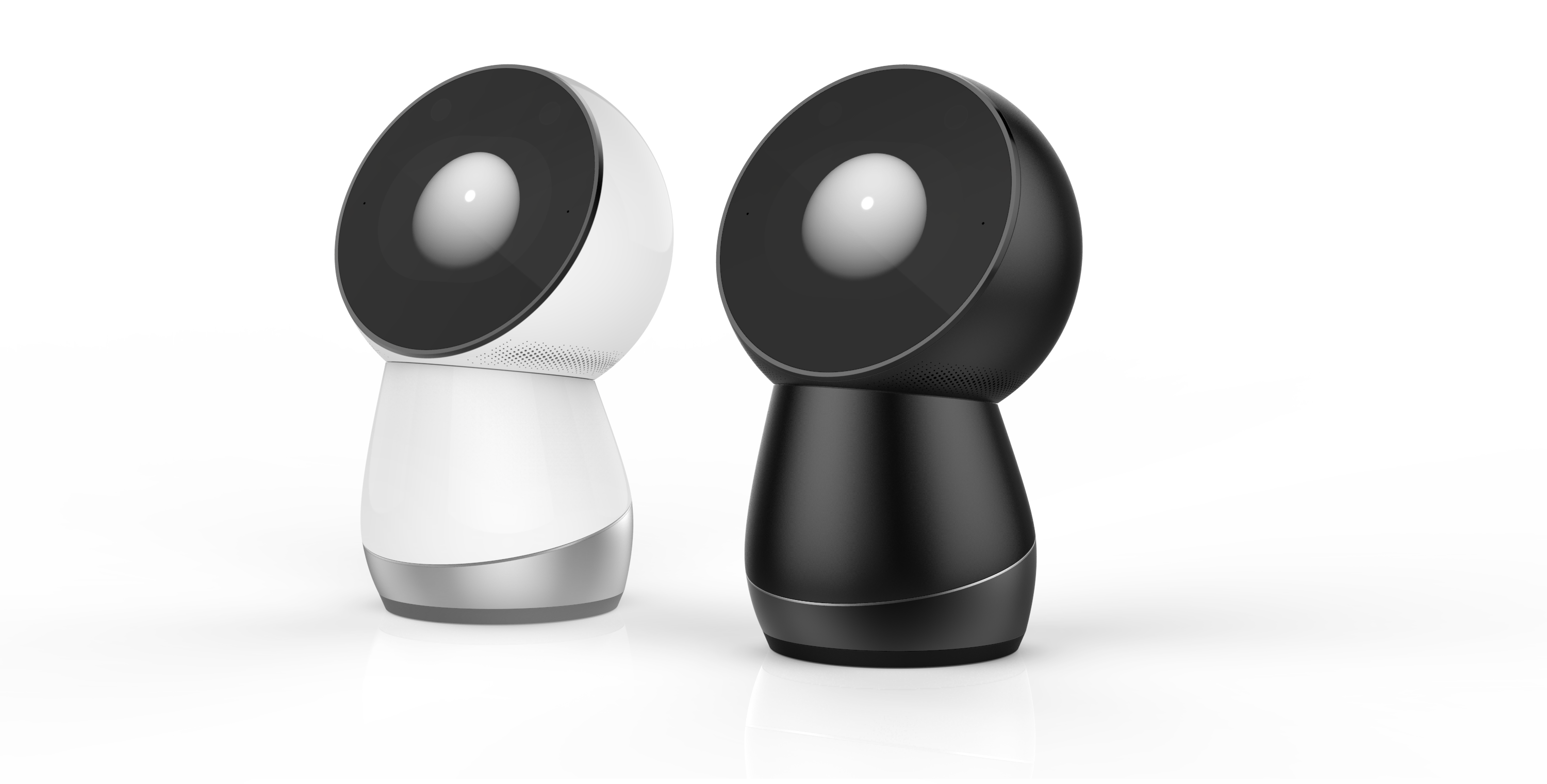
JIBO: Cute but crazy...

Hello, my name is JIBO!!  What is your name?


   When I researched the name of JIBO is said, "strong inner urge to be of service in some way that would uplift humanity as a whole."  They also said they love people. Also something else that is really cool is the fundraiser that it is doing with Indiegogo.  There goal was intended for $100,000 and instead got $2,289,606 in US dollars. 


JIBO is 11 inches tall and weighs about 6 pounds, and is a robotic machine that was made for people to use at home and to be a companion/helper around the house.  If you watched the video, they refured to JIBO as "he"  This was also to be made for to sit and will learn from the most of the household activities take place.  JIBO can also be for your kids to use  If you are thinking that JIBO moves, he does not!!  


From the Indiegogo page it talks about that you will have to connect it to your WiFi (which is needed), teach it to recognize you voice and face, learn what it can do, and download the app.  IF you are concerned about the "safety & privacy" they talked about it in the FAQ's. 

Thursday, September 11, 2014

Apple Pay


Apple Pay 
by Jacob Gilmore


This last Tuesday, Apple held their infamous Worldwide Developers Conference (WWDC). The Cupertino-based company released several highly anticipated products: the iPhone 6, iPhone 6 Plus, and the iWatch. However, a new service called Apply Pay, a mobile payment software, created buzz among many Apple gurus and technology enthusiasts.

In summary, an iPhone 6 or 6 Plus user will be able to purchase products or services with a simple press of the thumb. Users will be able to check out at a register by placing their phone in front of a wireless pay terminal to allow completion of the transaction using Apple's Touch ID technology (fingerprint). In the video below, Apple CEO Tim Cook introduces Apply Pay in much greater detail on how the entire transaction process works.


The one characteristic that is revolutionary about this technology isn't that its new (Google Wallet), but that Apple raised the bar to another level of protecting consumers. According to Eddy Cue, an Apple senior Vice President, "We create a device only account number and we store it safely in the Secure Element [which encrypts payment information], and each time you pay, we use a one-time payment number along with a dynamic security code, so you no longer have the static code on the back of your plastic card." Even better, if your iPhone is stolen or lost, you can suspend all cards to prevent future fraudulent payments without canceling your card.

However, unfamiliar technology like Apple Pay can cause consumers to worry about their confidential information. Cue also said, "Security is at the core of Apple Pay...so is privacy." Apple claims they are not in the business of collecting your data. In practice, when you use Apple Pay, Apple doesn't know what you bought, where you bought it, or how much the purchase was. Their focus is putting the transaction between the merchant, you, and your bank. In comparison to similar technologies such as Google Wallet, there is a stark difference regarding data collection. Patrick Moorhead of Moor Insights & Strategy says, "Google's primary business is advertising, and there was some fear around what Google would do with that data.

Two questions remain--are mobile payment technologies worth the convenience and the risk of a potential breach? If so, which companies will succeed at convincing the consumer(s) that their information is private, secure, and the best in the industry?

For more information on Apple Pay, click here
For more information on Google Wallet, click here
Source: Forbes

Tuesday, September 9, 2014

AT&T's Digital Life
by Kyle Gilligan

With technology becoming more and more common, there are few corners remaining in our lives that it has not permeated. However, it would seem that AT&T has found a new market that just might still be at the beginning stages of its acceptance. AT&T’s new Digital Life product line allow consumers to have a home that is automated in many ways and all controlled on a single account. AT&T has long been a provider of TV, internet, and phone services. In addition to this, by entering the market for the connected home, AT&T can now meet their customers technology needs on nearly every level. The Digital Life product includes features such as home security, thermostat controls, lighting control, water control, and many other options. Check out the video below for a demonstration of some of the products.


In addition to the previous product line, AT&T has recently announced the introduction of Digital Life Care, which will allow individuals to monitor the health and well-being of their elderly loved ones. This could be a very appealing alternative when considering the heavy emotional and financial burden of sending your loved one to an assisted living facility. AT&T plans to begin trials of this service in several US cities this year.

For an overview of AT&T's Digital Life products click here

For more information on the introduction of the new product, Digital Life Care click here